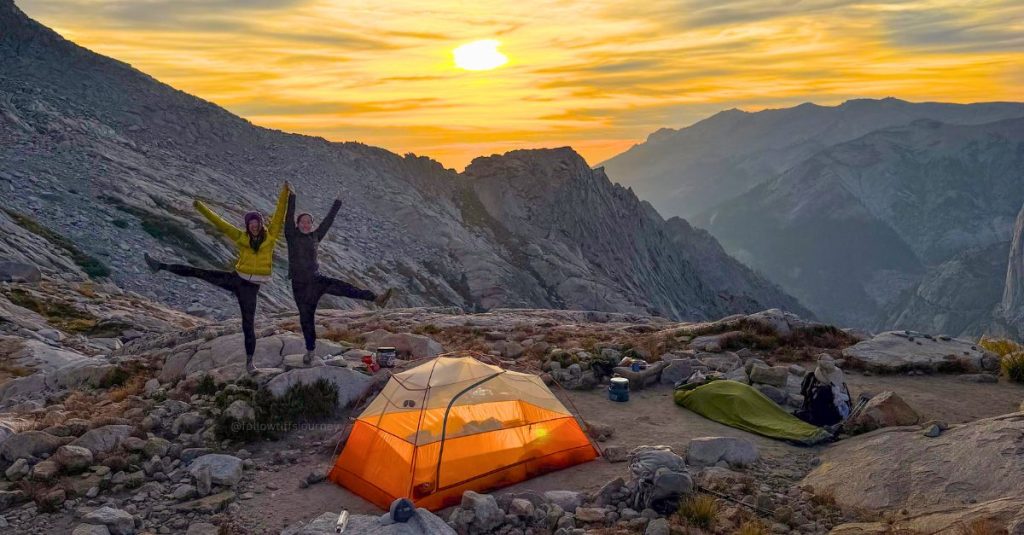


Thinking about trying backpacking for the first time but don’t know where to start?
California is home to some incredible backpacking, and the Sierra Nevada is one of my favorite places to experience it. I’ve spent years hiking and backpacking throughout Southern California and California’s Eastern Sierra, and these are the beginner-friendly trips I’d personally recommend for anyone ready to experience their first overnight in the mountains.
But here’s the thing: beginner-friendly does not necessarily mean easy.
Some of the best beginner backpacking trips in California still involve elevation gain, high-altitude hiking, or route-finding. What makes these trips beginner-friendly is that they offer a manageable introduction to backpacking without requiring advanced technical skills or a huge multi-day commitment.
And if you’re planning your first overnight this fall, even better. September and early October can be some of the best times to backpack in the Sierra, with cooler hiking temperatures, crisp evenings, and fewer people on the trails.
What Makes a Good Beginner Backpacking Trip?
Before choosing your first backpacking route, it’s important to understand that “beginner-friendly” looks different for everyone.
A first backpacking trip should ideally give you:
- A manageable distance with a loaded pack
- Established trails or relatively straightforward navigation
- Reliable water sources
- Established camping areas
- Scenery that makes carrying a heavy backpack feel worth it
- An opportunity to learn what gear you actually need before committing to a longer expedition
You also need to consider elevation.
Many Eastern Sierra trailheads start between 8,000 and 10,000 feet, which means a relatively short hike can feel much harder than the mileage suggests.
That’s why I wouldn’t choose a backpacking trip based on mileage alone.
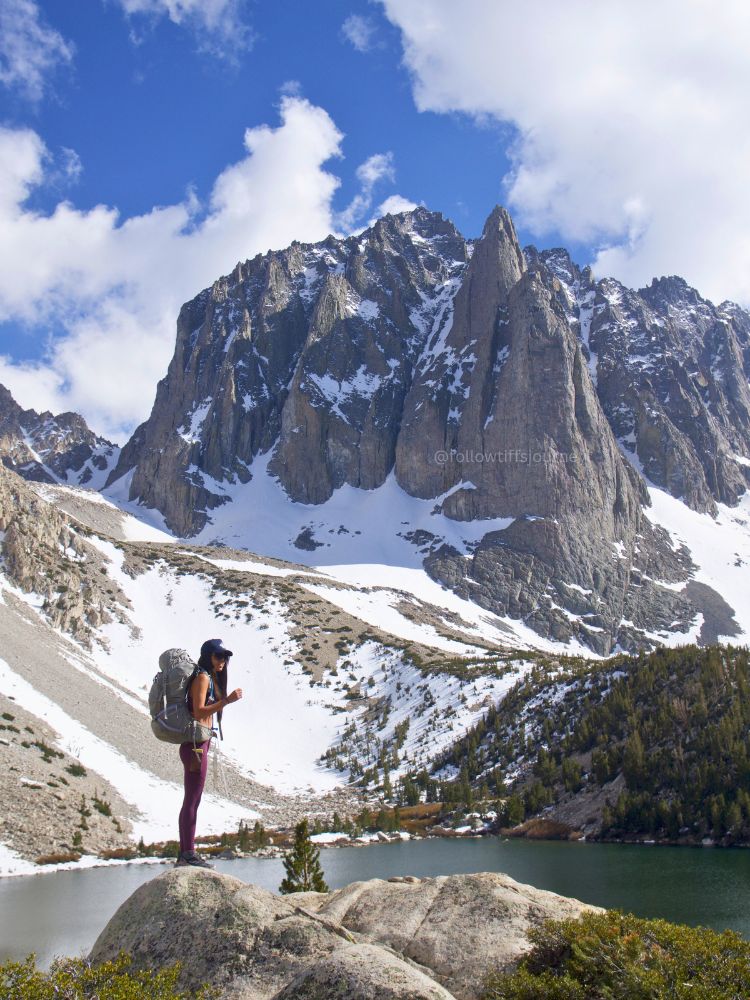
1. Parker Lake

Trailhead: Parker Lake Trailhead
Distance: 3.73 miles
Elevation gain: 720 ft
Highest elevation: 8,341 ft
Best for: First-time backpackers who want a short, rewarding overnight
If you’re nervous about your first backpacking trip, start here.
Parker Lake is one of the most beginner-friendly backpacking destinations in the Eastern Sierra—and one that I think doesn’t get nearly enough attention.
The hike is relatively short, the scenery is incredible, and your reward at the end is a vibrant alpine lake surrounded by the dramatic peaks of the Sierra.
That’s exactly what I want from a first backpacking trip: enough challenge that it feels like an adventure, but not so much that you’re questioning every life decision halfway there.
Why Parker Lake is great for beginners
It’s easy walking to a beautiful and vibrant alpine lake. The short distance makes it very manageable to test out new backpacking gear and a heavy overnight pack for the first time. This might be one of the best bang for your buck hikes.
What to know before you go
- Permits are required for overnight camping at Inyo National Forest.
- Camp along the right side of the lake; you’ll have to cross a log to get there.
- It’s always been windy at the lake when I’ve visited; not sure if that’s normal but be prepared.
Full Parker Lake trip report Here.
2. Little Lakes Valley
Trailhead: Mosquito Flat Trailhead
Distance: 8.1 miles
Elevation gain: 700 ft
Highest elevation: 10,944 ft
Best for: First-time backpackers who want maximum scenery with flexible camping options
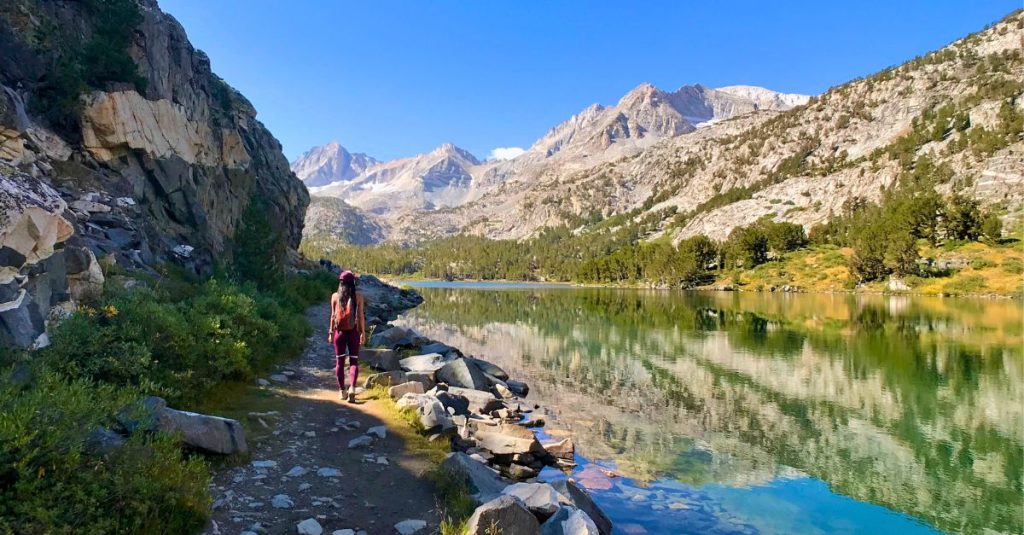
If I had to choose one classic Sierra trip from this list for someone who had never backpacked before, Little Lakes Valley would be near the top.
One of the biggest advantages is that the trailhead already starts at a high elevation, so you don’t have to gain thousands of feet just to reach the alpine.
And then there’s the scenery.
Little Lakes Valley has an almost ridiculous number of lakes packed into one beautiful high-alpine valley, which means you have plenty of options for how far you want to go.
Gem Lake is a beautiful option for an overnight, and if you’re feeling ambitious and comfortable with route-finding or cross-country hiking, you can continue farther toward Treasure Lake on an unmaintained trail.
But you absolutely do not have to reach Treasure Lake to have an incredible backpacking trip.
Why Little Lakes Valley is great for beginners
It’s a relatively “flat” hike that starts at high elevation so you’ll know how your body handles the altitude before you leave the car. Plus, there’s so many lakes and camp options and the surrounding peaks are a classic Sierra view.
Where can you camp in Little Lakes Valley?
Popular spots include Chickenfoot Lake and Gem Lakes, just make sure you follow the camping rules.
What to know about altitude
Little Lakes Valley starts at over 10,000 feet, so even though the trail is relatively gradual, the elevation can make it feel harder than expected. If you’re coming from lower elevation, take it slow, stay hydrated, and give yourself time to acclimate. If you start to feel very sick, consider heading back down.
Full Little Lakes Valley trip report here.
3. Blue Lakes to Hungry Packer Lake
Trailhead: Sabrina Lake Trailhead
Distance: 14.2 miles
Elevation gain: 2,037 ft
Highest elevation: 11,090 ft
Best for: Beginners ready to add route-finding to the adventure
This is the trip I’d recommend for someone who has maybe done one backpacking trip already and is comfortable hiking deeper into the mountains—or a very confident hiker who is new specifically to backpacking.
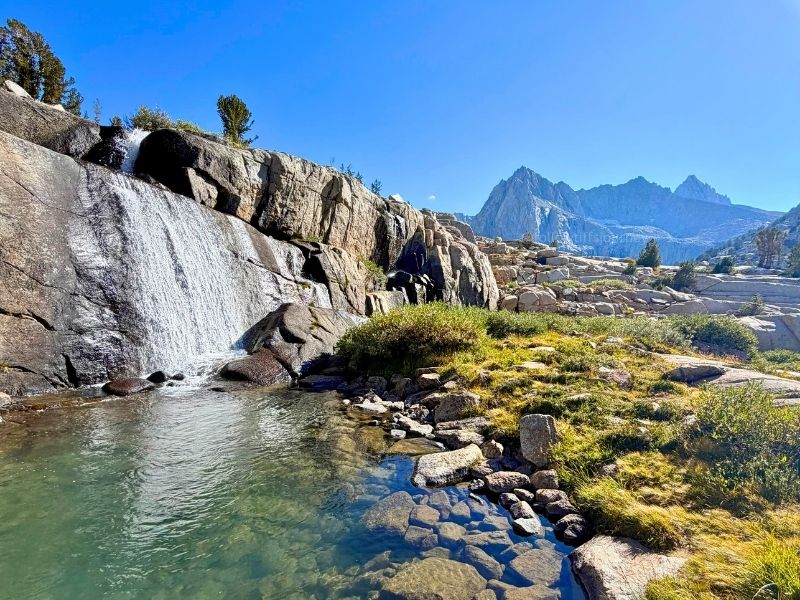
Blue Lake is the first major destination and is beautiful enough that you could easily make it your overnight destination.
But if you’re up for more, continuing toward Hungry Packer Lake, Moonlight Lake and Moonlight Falls makes this route even more rewarding.
There’s one important caveat:
The route can be surprisingly difficult to follow in places for a maintained trail.
If you’re new to backpacking, don’t assume that because a route appears on a map it’s going to look like a perfectly obvious trail on the ground.
Bring a downloaded map and know how to use it before you leave.
My GPX track: Blue Lakes Trail to Hungry Packer and Moonlight Lake
Blog post coming soon but I’ve recorded my GPX track from this hike — grab it here:
4. Duck Pass Loop

Trailhead: Coldwater Campground Trailhead
Distance: 11.2 miles
Elevation gain: 1,739 ft
Highest elevation: 10,502 ft
Best for: Beginners looking for a classic Mammoth backpacking experience
Duck Pass is a Mammoth classic for a reason.
You get alpine lakes, mountain views and the dramatic scenery of the Mammoth Lakes area without needing to commit to a huge multi-day expedition.
It isn’t flat, and you will definitely feel the elevation, but that’s part of why I like it as a beginner backpacking trip. And, the clear turquoise water is 100% worth it.
It gives you a chance to learn what hiking with a loaded pack actually feels like while still getting a massive payoff.
Why Duck Pass is great for beginners
Vibrant lakes, mellow trail grade, easy to follow trail that gets into the backcountry deep enough to feel like you’re in there, but not too deep to make you question it.
Where to camp
Barney Lake is a great spot to camp if you’re feeling the altitude or start later and looking for a shorter hike in, and then you can hike up Duck Pass to Duck Lake the next day before heading out.
What to know before you go
It’s a popular day hike so you won’t be alone out there and the parking lot can fill up quickly.
Full Duck Pass Loop trip report here.
5. Kearsarge Pass
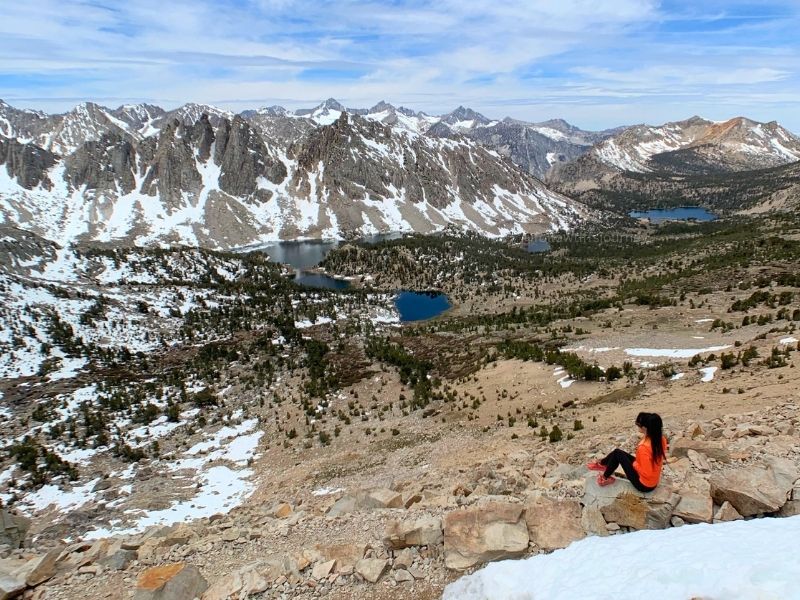
Trailhead: Onion Valley Trailhead
Distance: 9.3 miles
Elevation gain: 2,595 ft
Highest elevation: 11,760 ft
Best for: Beginners who are ready for a bigger elevation challenge
Kearsarge Pass is one of those Eastern Sierra hikes that belongs on almost everyone’s California hiking bucket list.
The route climbs from Onion Valley toward Kearsarge Pass, with spectacular Sierra scenery and multiple alpine lakes along the way.
This isn’t the route I’d necessarily hand to someone who has never carried a backpack before and say, “Have fun!”
But for a beginner who has already completed an overnight or two and wants to step things up, it’s an excellent next goal.
Why Kearsarge Pass is worth the effort
Kearsarge Pass sits on the border of Sequoia National Forest with stunning views of alpine lakes on both sides.
Camping and permit information
- Permits are required for overnight camping at Inyo National Forest on recreation.gov
- Camping is available along the route, with Flower Lake about 3.5 miles from the trailhead being the first established backcountry camping area.
- Bear-resistant food storage is required in the Kearsarge Pass area, and campfires are prohibited.
Full Kearsarge Pass solo hike trip report here.
BONUS: Big Pine Lakes to Second Lake
Trailhead: Big Pine Creek Trailhead
Distance: 11 miles
Elevation gain: 2,471 ft
Highest elevation: 10,097 ft
Best for: Beginners who are ready for a challenge
Okay, I know what you’re thinking.
Big Pine Lakes? Beginner-friendly?
Hear me out.
This is definitely the most questionable addition to this list from a pure difficulty standpoint. Big Pine Lakes is more moderate-to-strenuous than the other trips here, and I wouldn’t recommend it as someone’s first-ever backpacking trip.
But I couldn’t leave it off.
When people ask me about my favorite hikes in California, Big Pine Lakes is always near the top of the list.
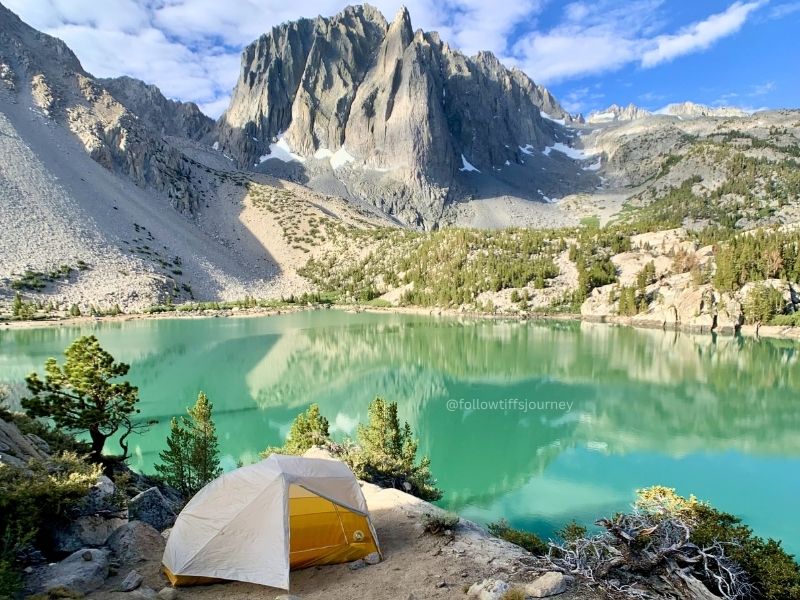
I call it the Patagonia of California, and once you see the granite peaks reflected in those turquoise alpine lakes, you’ll understand why.
If you’ve already done a shorter overnight or two and you’re ready to push yourself a little more, Big Pine Lakes is one of the most rewarding places to experience the Sierra… and all of California, really.
Why Big Pine Lakes is worth it
The glacial turquoise blue colors the lake with Temple Crag towering over it—would you ever have believed California has lake colors like that?!
What to know before backpacking Big Pine Lakes
There are so many flat spots to camp around second and third lake. Most people go for the same one and I get it, but be respectful and don’t overcrowd other campers; you can’t go wrong with any of the views. I’ve hiked here 20+ times, learn more about the different times to go on the blog.
Full Big Pine Lakes trip report here.
Which California Backpacking Trip Should You Do First?
If you’re completely new to backpacking, I would start with:
Easiest introduction: Parker Lake
Best overall first backpacking experience: Little Lakes Valley
Best for learning navigation: Blue Lakes → Hungary Packer Lake
Best Mammoth classic: Duck Pass Loop
Best next-level challenge: Kearsarge Pass
Best “I’m ready to work for it” trip: Big Pine Lakes
The right first backpacking trip isn’t necessarily the shortest one.
It’s the one that gives you enough challenge to feel like you’ve accomplished something without making you miserable.
And trust me—there’s a difference.
Why Fall Is One of My Favorite Times to Backpack the Eastern Sierra
September and early October can be an incredible time to backpack in the Sierra but honestly, you can camp all the way until November if you have cold weather gear.
The biggest reason?
The temperatures.
Summer days in the high country can be warm, while nights can still be surprisingly cold. By early fall, daytime temperatures are often more comfortable for hiking, while the cooler evenings make it much more enjoyable to crawl into your sleeping bag after a long day on the trail.
Need help picking out gear that best fits your needs and time of year for camping? Schedule a call with me for direct consultation.
You may also encounter fewer people than during the height of summer.
That said, fall mountain weather can change quickly. Snow, freezing temperatures and storms are still possible, especially at higher elevations, so always check the forecast and current trail conditions before heading out.
For my favorite spots to see Fall colors in the Eastern Sierra Mountain, visit my guide here.
What You Need for Your First Backpacking Trip
You don’t need to spend thousands of dollars on gear to try backpacking.
For your first trip, focus on the essentials:
- Backpack
- Tent
- Sleeping bag or quilt
- Sleeping pad
- Water filtration or purification system
- Backpacking stove and fuel
- Food
- Navigation
- Headlamp
- Layers appropriate for the forecast
- First-aid and emergency supplies
- Bear-resistant food storage where required
- Shop my gear closet here
Check out my full Beginners Backpacking Guide here.
The goal of your first trip isn’t to build the perfect ultralight setup, although I am highly recommending a lightweight set-up in the gear links above because it just provides a better experience to not have a super heavy pack.
It’s to figure out whether you actually enjoy carrying your house on your back😂
Once you know you love it, you can start dialing in your gear.
Final Thoughts on Backpacking as a Beginner
You don’t have to be an expert hiker to go backpacking.
You don’t have to own the lightest gear.
And you definitely don’t need to start with a 50-mile thru-hike. I personally love 1-2 night camping trips.
Pick a route that matches your experience, learn how to use your gear before you leave, understand the permit and camping rules, download your maps, and give yourself enough time to enjoy the experience.
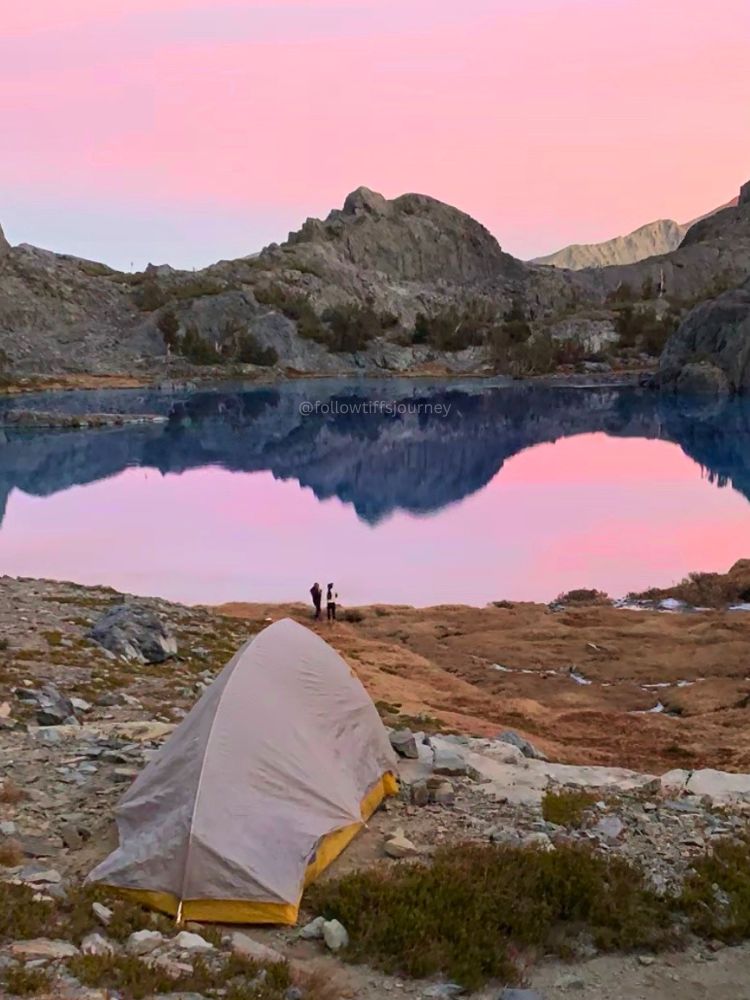
Because eventually, you’ll probably find yourself standing beside an alpine lake at sunset wondering why you waited so long to try it.
And that’s when you’re hooked.
Which of these beginner-friendly California backpacking trips are you adding to your list? Let me know in the comments
Booking travel soon?
Please consider using my affiliate links below. It costs nothing additional for you but helps me maintain the ever-increasing costs of running a travel blog:
General travel through Tripadvisor here.
Book your flights here.
Book your accommodations here on Expedia, Booking.com, Hotels.com, and VRBO.
Book your car rentals here.
Book your tours here.
Book your travel insurance here.
Shop my favorite gear here.


Tiff, the owner and author of Follow Tiff’s Journey, is a California/ Colorado-based adventurer and outdoor connoisseur who divides her heart between the Eastern Sierra Mountains and the Colorado Rocky Mountains. Despite her fear of heights, she’s become a seasoned mountaineer, ultralight hiking and backcountry camping enthusiast, expert road trip planner, and a fervent explorer of alpine lakes, natural hot springs, and sandstone canyons.
With 10 years of experience exploring the outdoors, her blog is your go-to source for all things wilderness, offering invaluable insights and pro tips, essential gear recommendations, and awe-inspiring stories from her adventures.
Join Tiff on her quest to share the wonders of nature and inspire others to follow their own path in the great outdoors.