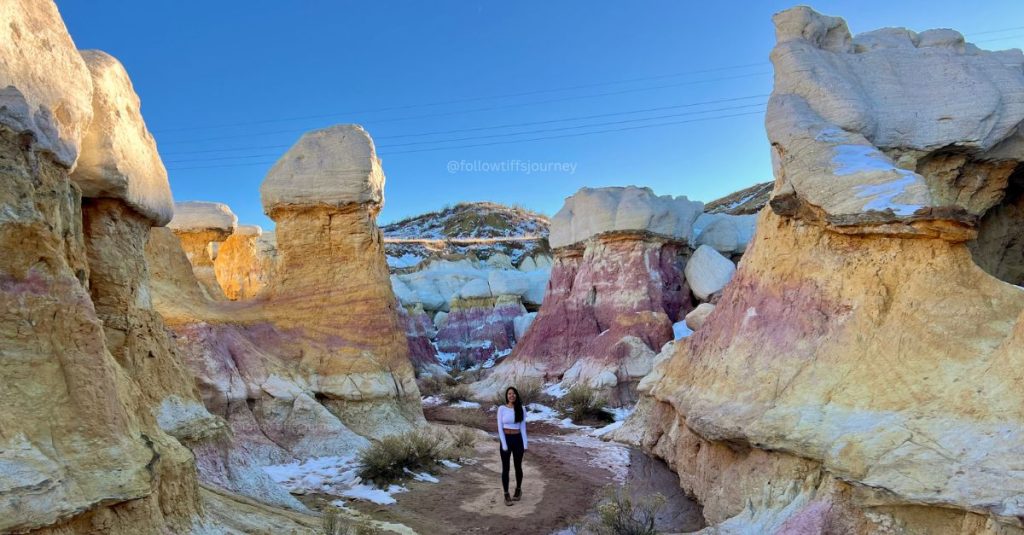


I’d seen the photos of Paint Mines Interpretive Park on Instagram for years before I finally made the drive out — those wild pink and gold clay spires rising out of flat prairie, looking like something out of Utah that somehow ended up in the middle of the Eastern Plains and just outside of the Colorado Rocky Mountains. I visited right after Thanksgiving, which turned out to be one of the best decisions I’ve made for a Colorado day trip, and I’m going to tell you exactly why below.
This guide covers everything you need before you go: how to get there, where to park, what the trail actually looks like, when to visit (my honest take on off-season vs. summer), and the rules you need to know so you don’t accidentally damage a 55-million-year-old landscape.
Pro Tip: If you’re building a Colorado Springs itinerary or planning a day trip from Denver/ Boulder, Paint Mines pairs perfectly with a Garden of the Gods stop — save that pairing for the “Things to Do Nearby” section below.
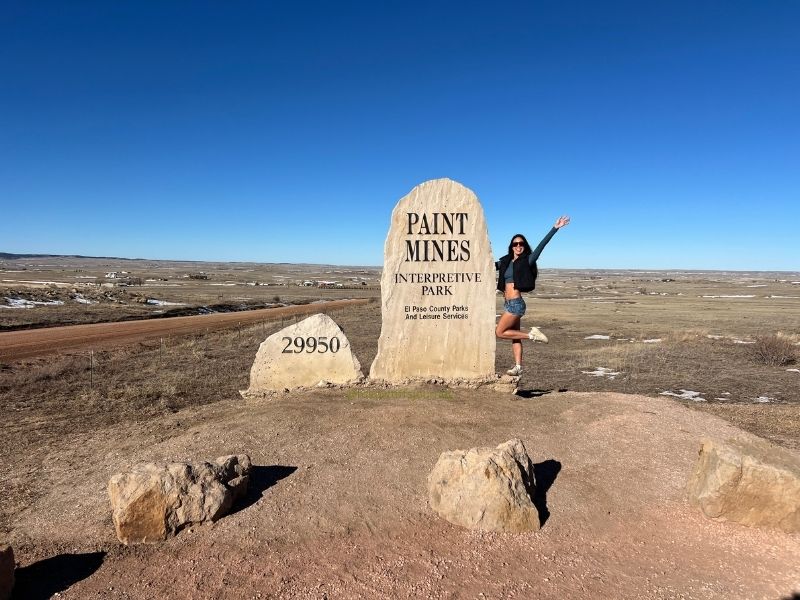
Quick Trail Stats: Paint Mines Interpretive Park
Distance: Up to 4 miles of interconnected trail (shorter loop options available)
Elevation Gain: Minimal — around 300–500 feet depending on your route
Difficulty: Easy
Location: 29950 Paint Mines Road, Calhan, CO 80808
Time Needed: 1.5–2.5 hours
Cost: Free
Dogs: Not allowed
Best Time to Visit: Fall through spring for cooler temps and softer light; sunrise or golden hour year-round for photos
How to Get to Paint Mines Interpretive Park
Paint Mines sits near the small town of Calhan, about 35–40 minutes northeast of Colorado Springs. Here’s the drive time from a few common starting points:
| Starting Point | Distance | Drive Time |
| Colorado Springs | ~35 miles | 40–50 min |
| Denver | ~85 miles | 1 hr 40 min |
| Pueblo | ~65 miles | 1 hr 15 min |
| Boulder | ~105 miles | 2 hrs |
If you’re driving from Denver, the route runs CO-83 → CO-86 East → County Road 77 → County Road 94 → Paint Mines Road. Heads up: the final stretch is unpaved and washboarded, so take it slow.
As you approach, the terrain is flat, open grassland for miles — you’ll genuinely wonder if you’re in the right place. Keep driving. The formations are tucked into a gully and don’t reveal themselves until you’re right on top of them, which honestly makes the reveal better.
Where to Park
There are three parking areas, and which one you choose changes your whole approach to the trail:
- Main Parking Lot — The primary entrance, with the only restroom in the park (no running water, so bring hand sanitizer). Most people start here.
- Overlook Parking Lot — The closest lot to the main hoodoo formations if you want minimal walking to the best photo spots.
- Upper Parking Lot — A third access point that connects into the trail system from a different angle.
If you’re short on time or hiking with kids, park at the Overlook lot — you’ll be standing among the formations within a few minutes.

What to Expect on the Trail
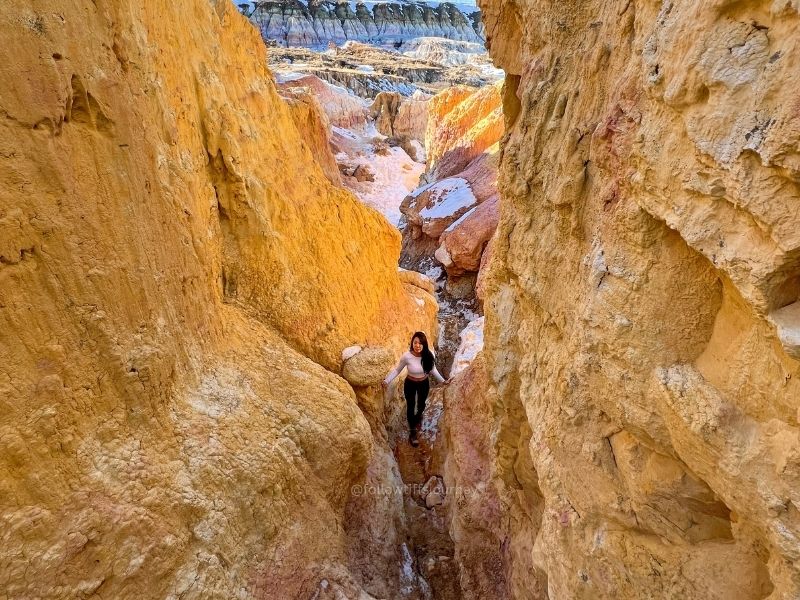
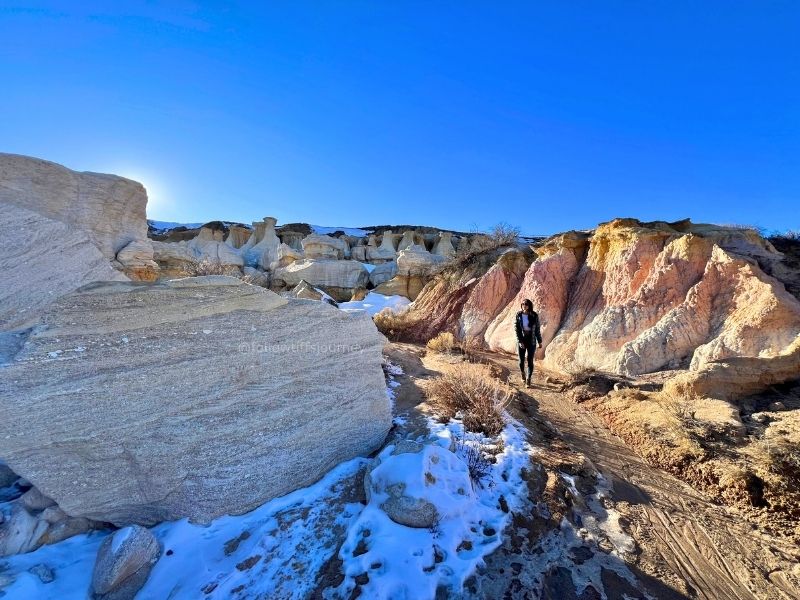
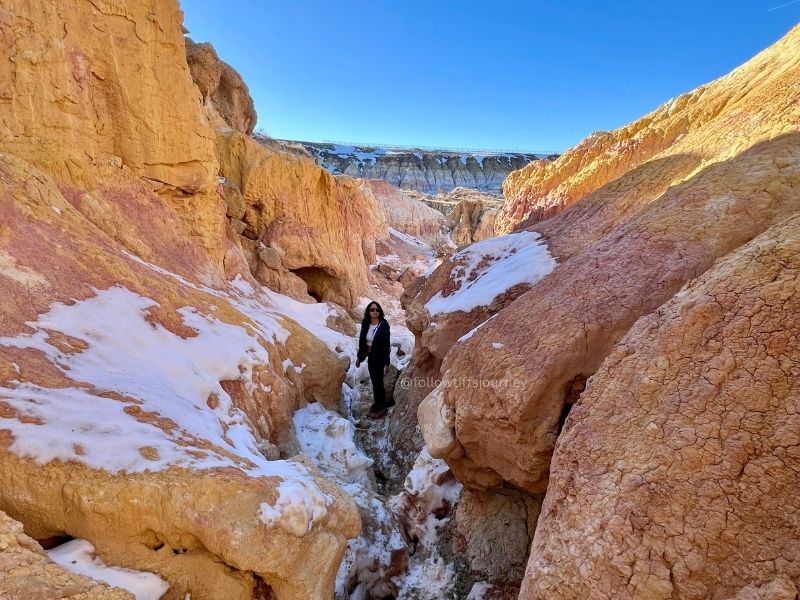
The trail system winds through a gully lined with hoodoos, spires, and eroded clay walls, with the Ecology, Prehistory, History, and Geology interpretive sites spaced along the way. It’s also open and windy out there, so pack a layer even on a warm day.
It’s mostly flat with a couple of short, steeper sections, and the surface is clay — which turns into a genuinely bad time if you visit after rain, so check conditions first.
I visited in early December, and the trail was quiet and completely mine for most of the afternoon. The full loop took me just under two hours with plenty of stops for photos, but you can easily cut that down to 45 minutes to an hour if you skip the outer loop and head straight for the main formations from the Overlook lot.
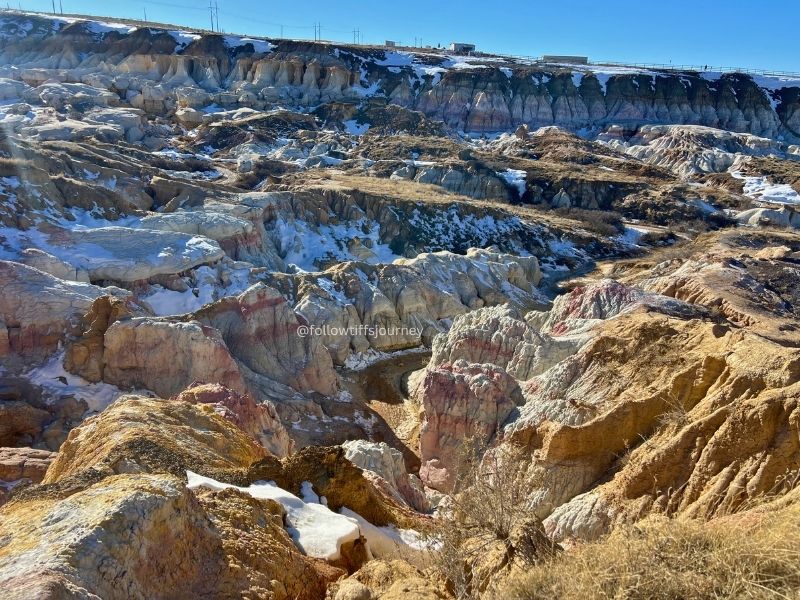
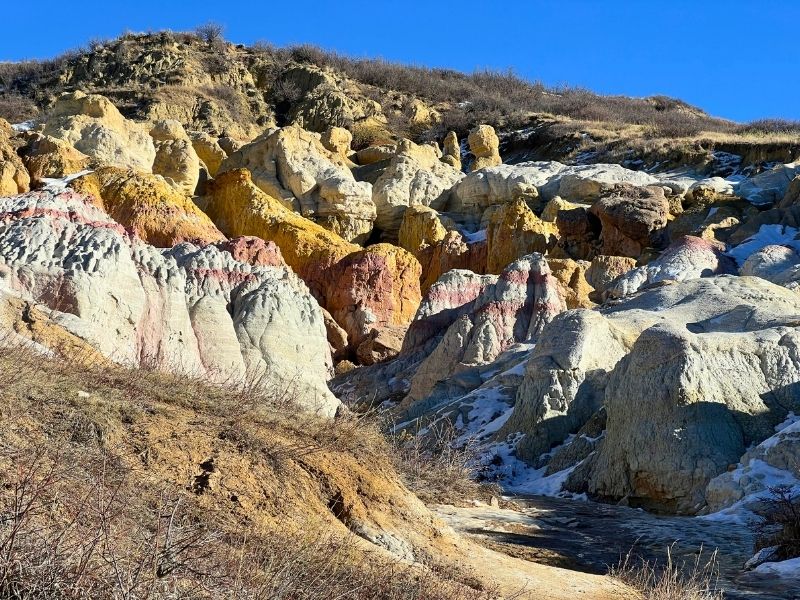
The Overlook Area, near the end of the loop, gives you a full view down into the hoodoo field and is worth saving for last — it’s the best spot to actually understand the scale of what you just walked through.
What Are the Paint Mines?
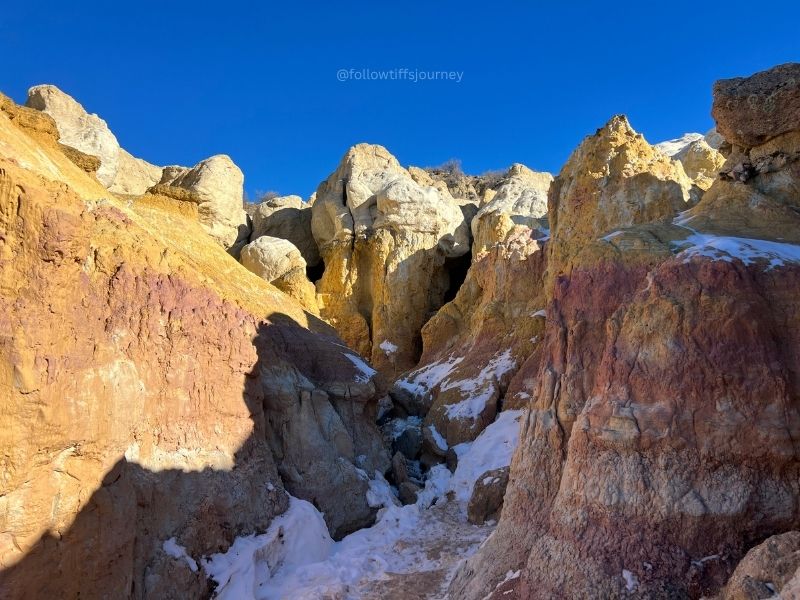
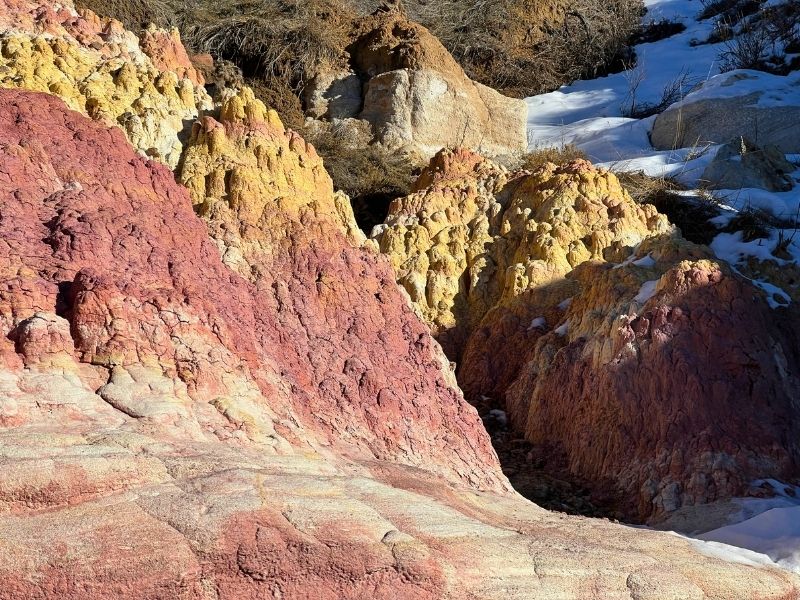
The Paint Mines are a cluster of clay hoodoos and spires spread across 750 acres of prairie, colored in golden yellow, rose pink, and mauve by oxidized iron in the clay. They formed roughly 55 million years ago as wind and water eroded the exposed clay layers, and it’s one of only a handful of places in Colorado with this kind of geology. The site is also listed on the National Register of Historic Places — evidence of human use here dates back roughly 9,000 years, and Native American communities later collected the colorful clays for pottery and ceremonial paint, which is where the park gets its name.
Best Time to Visit: Why I’d Recommend a November and December Trip
Most guides to Paint Mines are written from a summer visit, and I get why — but I’d actually push you toward fall, winter, or early spring instead, and here’s my honest reasoning from visiting in early December.
There is almost zero shade anywhere on this trail. In summer, that means full sun exposure on exposed clay with temperatures that climb fast — not ideal. In late Fall, that same lack of shade turned into cool, comfortable hiking weather with soft, low-angle light hitting the formations for most of the day instead of just at golden hour. The crowds were also nearly nonexistent, which meant I could actually get photos without other hikers walking into frame.
If you’re chasing photography specifically, golden hour (right after sunrise or before sunset) will always give you the most saturated color in the clay, regardless of season. But for overall comfort and crowd levels, I’d take a crisp November morning over a July afternoon every time.
Is Paint Mines Worth Visiting?
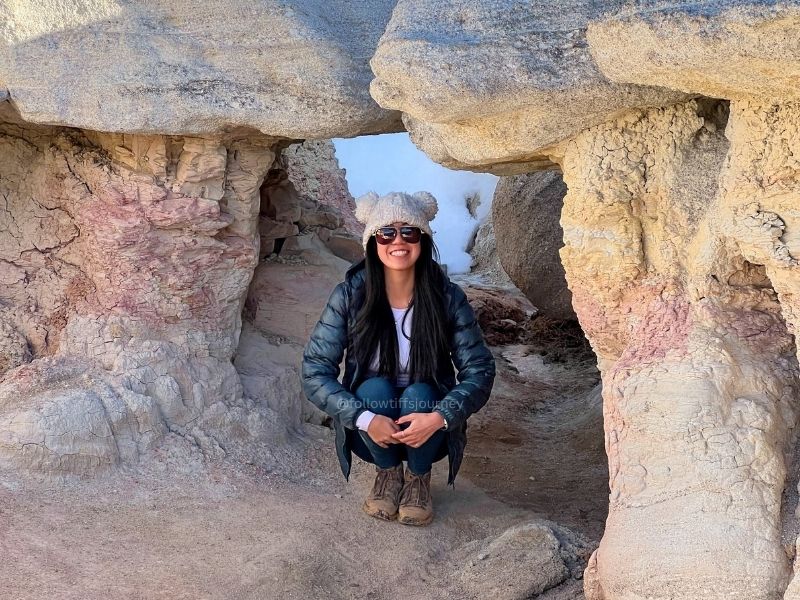
Yes — and it’s one of the more unique landscapes in Colorado precisely because it doesn’t look like the rest of Colorado. If you’re picturing mountains and alpine lakes, this will surprise you. It’s closer in feel to the badlands of the Southwest than anything in the Rockies, and that contrast is exactly what makes it worth the drive.
It’s also genuinely accessible — minimal elevation gain, no technical terrain, and a short enough distance that it works for families, casual hikers, and anyone looking for a half-day trip that doesn’t require mountain fitness.
Park Rules and What to Know Before You Go
- No dogs, horses, or bicycles allowed anywhere in the park
- No drones
- Stay off the rock formations — the clay is fragile, and climbing on it causes permanent damage
- Leave No Trace — do not remove clay, rocks, or plants; it’s illegal and it degrades the formations for everyone after you
- No shade — bring sun protection regardless of season
- Bring water — there’s a restroom at the main lot but no drinking fountains
- Park is free and open daily, dawn to dusk, year-round
What to Pack for Paint Mines
- Sun hat and sunscreen (there is genuinely no shade)
- A couple liters of water — no fountains on site
- A camera or phone with a wide-angle lens for the formations
- Layers if visiting in shoulder season — mornings run cold on the exposed plains
- Sturdy trail shoes — the clay surface gets uneven and slick if wet
Things to Do Near Colorado Springs After Paint Mines
Since Paint Mines is a shorter visit, it pairs well with a full day around Colorado Springs. A few worth adding to your itinerary:
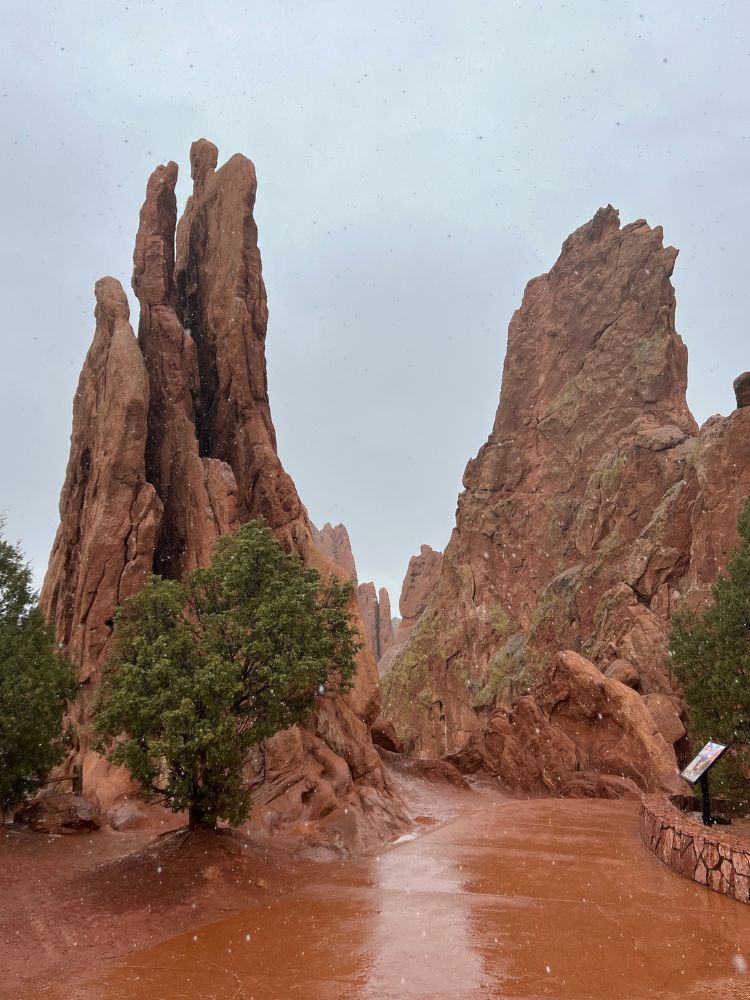
- Garden of the Gods — Colorado Springs’ most iconic rock formations, about 45 minutes back toward the city. Book a jeep tour here.
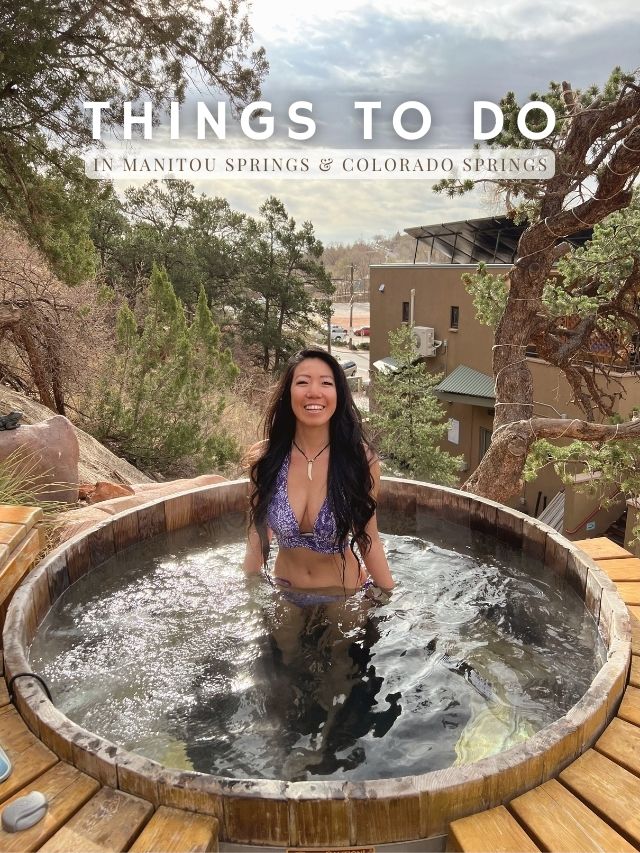
- Manitou Springs — Walkable downtown with mineral springs, shops, and food if you want a low-key second stop
- Pikes Peak — Drive or take the cog railway to the summit if you’re already in the area and want the alpine contrast to Paint Mines’ prairie landscape
- Cave of the Winds — Good option if you’re traveling with kids and want an indoor/outdoor mix
👉 Book a small group tour of Pikes Peak Cog Railway AND Garden of the Gods here.
More Colorful Destinations You Might Like
If you like colorful landscapes and hoodoo-like formations, you might also like these:
FAQ: Paint Mines Colorado
Where are the Paint Mines located?
Paint Mines Interpretive Park is located at 29950 Paint Mines Road in Calhan, Colorado, about 35–40 minutes northeast of Colorado Springs.
Is Paint Mines Interpretive Park free?
Yes. The park is free to enter and open daily from dawn to dusk, year-round.
Are dogs allowed at Paint Mines?
No. Dogs, horses, and bicycles are prohibited throughout the park to protect the fragile clay formations.
How long does it take to hike the Paint Mines trail?
Plan for 1.5–2.5 hours for the full loop, or 45 minutes to an hour if you park at the Overlook lot and head straight to the main formations.
What’s the best time of day to photograph the Paint Mines?
Golden hour — shortly after sunrise or before sunset — gives you the most saturated color in the clay formations.
Can you climb on the rock formations at Paint Mines?
No. The clay hoodoos are fragile and easily damaged. Climbing on them is prohibited and causes permanent erosion damage.
Final Thoughts: Is Paint Mines Worth the Drive?
Paint Mines Interpretive Park is one of the most unique landscapes in Colorado precisely because it breaks the mold of what you expect from a Colorado hike — no mountains, no alpine lake, just wind-carved clay in colors you don’t expect to find on the plains. If you’re building out a Colorado Springs itinerary and want something that photographs beautifully without demanding much fitness, this earns its spot.
Booking travel soon?
Please consider using my affiliate links below. It costs nothing additional for you but helps me maintain the ever-increasing costs of running a travel blog:
General travel through Tripadvisor here.
Book your flights here.
Book your accommodations here on Expedia, Booking.com, Hotels.com, and VRBO.
Book your car rentals here.
Book your tours here.
Book your travel insurance here.
Shop my favorite gear here.


Tiff, the owner and author of Follow Tiff’s Journey, is a California/ Colorado-based adventurer and outdoor connoisseur who divides her heart between the Eastern Sierra Mountains and the Colorado Rocky Mountains. Despite her fear of heights, she’s become a seasoned mountaineer, ultralight hiking and backcountry camping enthusiast, expert road trip planner, and a fervent explorer of alpine lakes, natural hot springs, and sandstone canyons.
With 10 years of experience exploring the outdoors, her blog is your go-to source for all things wilderness, offering invaluable insights and pro tips, essential gear recommendations, and awe-inspiring stories from her adventures.
Join Tiff on her quest to share the wonders of nature and inspire others to follow their own path in the great outdoors.