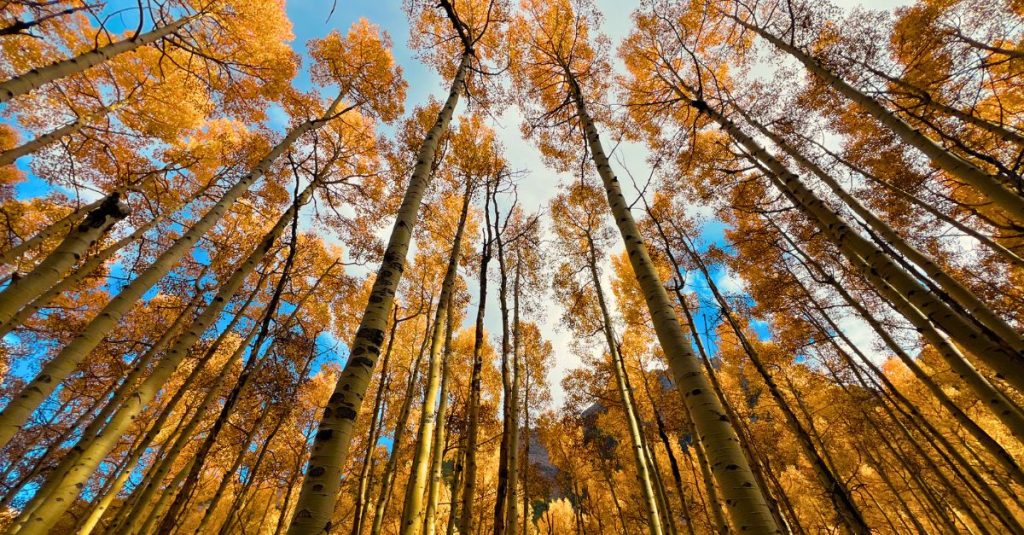


I’ve spent enough Septembers and Octobers chasing aspens across Colorado (& California) to know one thing for sure: the “best time to see Colorado fall colors” answer everyone gives you — mid-September to late October — is true and also kind of useless. It’s true for the state. It’s almost never true for your specific trail on your specific weekend.
That gap between “state average” and “what you’ll actually see when you get out of your car” comes down to elevation. And this year, it comes down to something else too: one of the driest, most fire-stressed summers Colorado’s had in years, and that changes the calculus in ways worth understanding before you plan your trip.
To start with, Colorado Fall colors started EARLY this year.
See current photos of 2026 Colorado Fall colors HERE. Updating this report as I make my way out over the next few weeks 🙂
Why Elevation Changes Everything
Aspens don’t turn gold just because temperatures drop. The biggest trigger is shorter days, which signal the trees to stop producing chlorophyll. But elevation determines how quickly that process unfolds. Since higher elevations cool much faster in early fall, aspens above 10,000 feet typically peak well before those growing in lower valleys.
Let me put this in an easier perspective to understand:
Imagine two identical aspens:
- One is growing at 10,500 feet on Independence Pass.
- The other is growing at 7,500 feet near Buena Vista.
Both experience almost the same shortening days. That seasonal signal begins the process in both trees. But the one at 10,500 feet is also dealing with freezing nights, cooler days, and a much shorter growing season. Those conditions speed up chlorophyll breakdown, so it reaches peak color earlier.
That’s why color moves through Colorado like a wave rolling downhill:
- High country (10,000 ft+): Independence Pass, Boreas Pass, Breckenridge, the highest reaches of the San Juans. First to turn, first to drop. You’re often looking at a two-to-three week window, sometimes shorter.
- Mid-elevation (8,000–9,500 ft): Where most of your classic drive-and-hike spots live — Ouray, Telluride, Silverton, Kebler Pass, Crested Butte, Golden Gate Canyon. This band holds color longer and is usually your best bet for a wider viewing window.
- Valleys and lower towns (6,500–8,000 ft): Last to turn, and where color often lingers into mid-October even after the high peaks have gone bare.
Latitude adds a second layer on top of this — color generally starts in northern Colorado (Steamboat, Rocky Mountain National Park) and rolls south toward the San Juans and Durango over the following two to three weeks. So on any given day in late September, you could have bare trees at Independence Pass, peak color in Ouray, and still-green aspens in a Durango valley — all at the same time, all a few hours’ drive apart.
Pro Tip: If you only have one weekend and you’re not sure where peak will be, aim for mid-elevation. It’s the most forgiving band — wide enough of a window that you’re unlikely to completely miss it.


What’s Different About 2026
Normally I’d stop there — elevation and latitude explain most of the variation you’ll see. But this year has an extra variable, and it’s a big one.
Colorado is heading into fall after one of its driest years in recent memory. A historically low snowpack—especially in western Colorado and the San Juan Mountains—combined with ongoing drought and a hot, dry summer has left much of the state stressed. Dry conditions have also increased wildfire risk across western Colorado, which could impact both fall colors and visibility.
And this isn’t just a one-off. Research from the Colorado School of Mines suggests climate change has made snow drought years like this far more likely, meaning these dry fall seasons may become increasingly common.
So what does drought actually do to aspens? Here are my predictions. It’s not just “less pretty” — there’s a real mechanism behind it. When a tree doesn’t have enough water, it can’t keep producing chlorophyll at a normal rate. Instead of a slow, vivid transition through the full spectrum of gold, orange, and red, drought-stressed leaves often skip straight to a duller yellow-brown, and they drop off the tree days to weeks earlier than they would in a normal year.
Colorado’s own state forest entomologists have tracked this pattern before — comparing it to a houseplant you forgot to water: the edges brown first, and the tree pulls back resources rather than putting on its usual show.
What this means practically for 2026:
- Expect an earlier peak, especially at higher elevations. If you’re used to planning around “late September,” build in the possibility that high country spots peak a week or more ahead of that.
- Some groves may look duller or browner than a typical year, rather than the classic saturated gold. This varies a lot by microclimate — a grove near a stream or in a wetter drainage may still put on a great show even in a dry year, while an exposed, south-facing slope may brown out fast.
- The color window itself may be shorter. Drought-stressed leaves tend to drop faster once they turn, so the “just right” weekend may be narrower than usual.
- Smoke is a real planning variable this year, not just a color one. Haze from regional wildfires can flatten your photos and reduce visibility on scenic drives, even on days with technically clear skies.
- Wildfires have burned off a lot of trees. This means there may be less leaves to turn colors to start with. Places like Own Pass was heavily affected by the recent Gold Mountain Fire (started end of June 2026) and will no longer have that same fall colors shot you were going for.
None of this means skip fall in the San Juan Mountains this year — it means go in with realistic expectations, watch conditions more actively than usual, and build some flexibility into your plans instead of locking in one exact weekend months in advance.
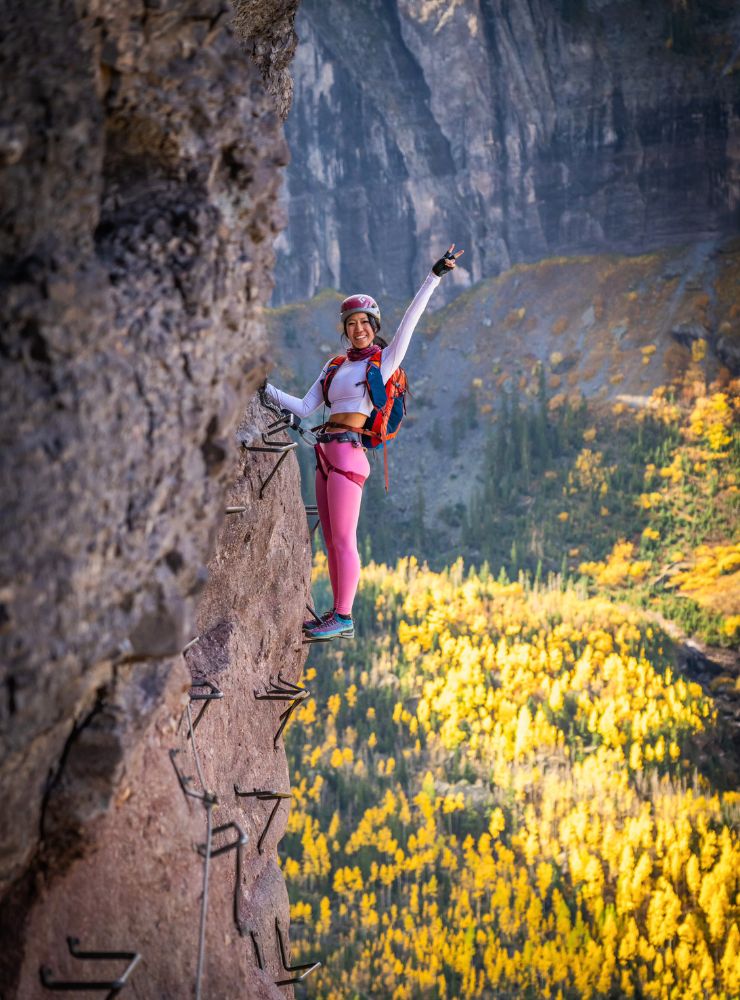
I climbed the Telluride Via Ferrata in early Oct one year and the fall colors view from it was incredible—read more here.
What This Means for the San Juan Mountains Specifically
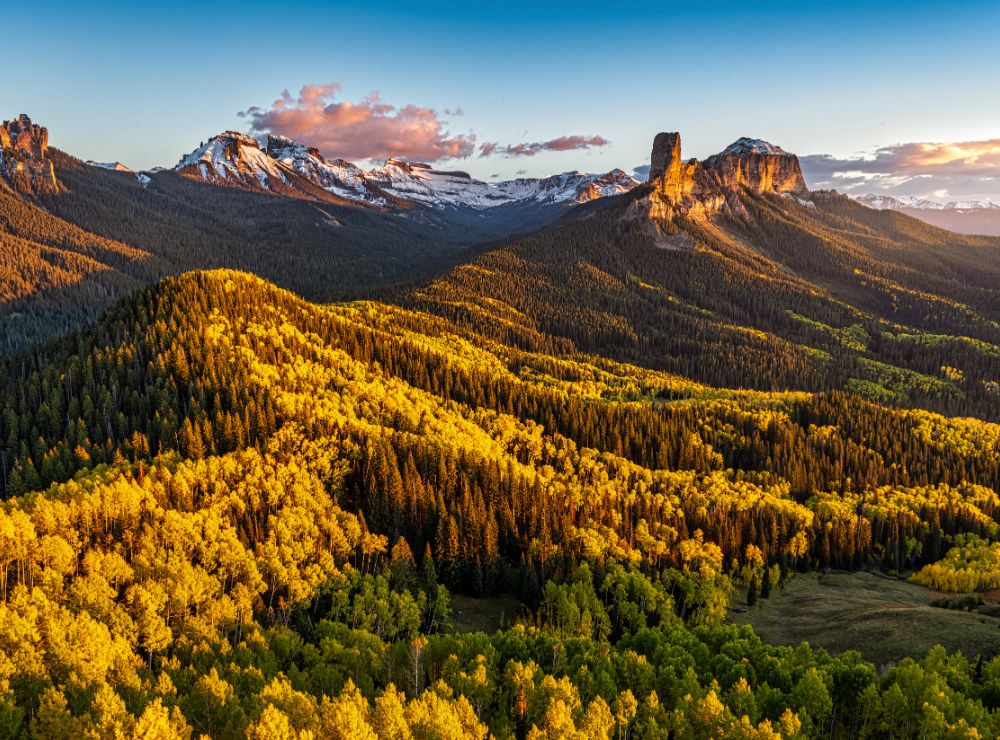
The San Juans are a great case study for elevation banding because the terrain changes so fast — you can go from alpine tundra to a river valley in the same drive. Based on the elevation pattern above and this year’s early-drought conditions, here’s how I’d personally think about timing if you’re headed toward Ouray, Telluride, or Silverton this year:
- 10,000 ft+ (Imogene Pass, upper basins around Ouray): Watch for color starting mid-September, potentially earlier than that given the drought stress.
- 8,000–9,500 ft (Million Dollar Highway corridor, most of the classic Ouray-to-Silverton drive): Your best target window, likely still landing in the back half of September this year rather than stretching into October.
- Valleys (Ridgway, lower Uncompahgre River drainage): Should still hold into early October, though possibly with less vivid color than a wet year would produce.
I’ll be tracking this in real time as we get closer to peak — subscribe to my newsletter for updates, or check my full guide to the best places to see Colorado fall colors for specific trail and drive recommendations once you’ve got your timing narrowed down.
FAQs
Does elevation really matter that much for fall colors in Colorado?
Yes. Higher elevations cool faster in early fall, which triggers aspens to change color and drop leaves earlier than trees at lower elevations, even in the same region on the same date.
Will drought ruin fall colors in Colorado this year?
Not ruin — but likely shift them. Drought-stressed aspens tend to turn color earlier, appear duller or browner in some areas, and drop leaves faster than in a wet year. Color quality will likely vary a lot by microclimate.
When will the San Juan Mountains peak in 2026?
Given this year’s record-low snowpack and ongoing drought, expect an earlier-than-average peak — potentially mid-to-late September at higher elevations, with mid-elevation areas like the Ouray-to-Silverton corridor following shortly after.
Does wildfire smoke affect fall foliage viewing?
It can affect visibility and photography even when skies look clear, and 2026 is shaping up to be an active fire season in western Colorado. Check air quality and regional fire activity before long scenic drives.
Colorado Fall Hikes You Might Like
Other Short Fall Hikes in Colorado I’ve Done That’s Worth Your Time
Colorado Travel Guides
Booking travel soon?
Please consider using my affiliate links below. It costs nothing additional for you but helps me maintain the ever-increasing costs of running a travel blog:
General travel through Tripadvisor here.
Book your flights here.
Book your accommodations here on Expedia, Booking.com, Hotels.com, and VRBO.
Book your car rentals here.
Book your tours here.
Book your travel insurance here.
Shop my favorite gear here.


Tiff, the owner and author of Follow Tiff’s Journey, is a California/ Colorado-based adventurer and outdoor connoisseur who divides her heart between the Eastern Sierra Mountains and the Colorado Rocky Mountains. Despite her fear of heights, she’s become a seasoned mountaineer, ultralight hiking and backcountry camping enthusiast, expert road trip planner, and a fervent explorer of alpine lakes, natural hot springs, and sandstone canyons.
With 10 years of experience exploring the outdoors, her blog is your go-to source for all things wilderness, offering invaluable insights and pro tips, essential gear recommendations, and awe-inspiring stories from her adventures.
Join Tiff on her quest to share the wonders of nature and inspire others to follow their own path in the great outdoors.